
NETWORK – Globalhealth
Information for doctors
Departments

Department of PRP
Standard protocol for therapy with platelet-rich autologous blood plasma
Patient information
Attention! This page is intended exclusively for doctors.
For patients who would like to find out more about the therapies we offer, we have created a section tailored specifically to your needs:
To the patient information
Note for doctors
The following information is in no way a substitute for comprehensive hands-on training in injection lipolysis. Only through the theoretical and practical experience gained in our workshops can treatment be carried out safely and efficiently. Our one-day hands-on training course combines three regenerative therapies: mesotherapy, platelet-rich plasma and microneedling.
Topic navigation
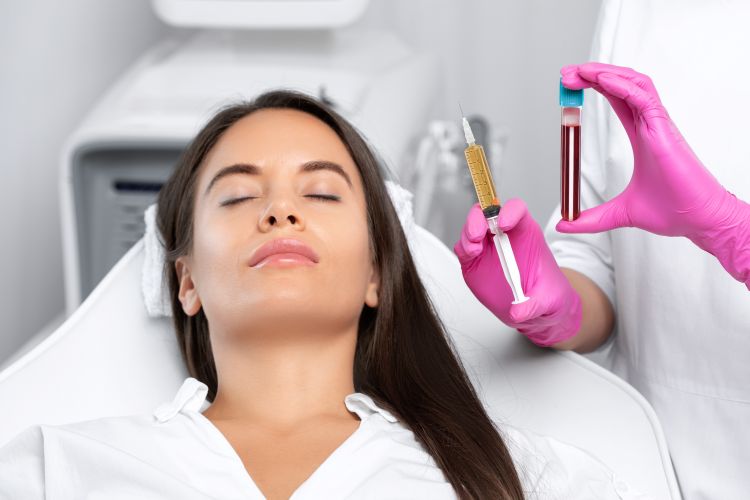
The PRP department is one of the newest departments in the Aesthetics Network and is concerned with establishing a uniform standard protocol for treatment with platelet-rich autologous blood plasma. This places it alongside the AestheticsMeso department in the family of regenerative procedures. It therefore makes sense to prioritise research into synergy effects with mesotherapy and microneedling.
The development of the PRP department
After the work of our AestheticMeso department had borne such valuable fruit, it became clear to us that treatment with platelet-rich plasma (PRP) offered more potential than just an extension of mesotherapy. In order to give this treatment method greater significance and to further develop and promote it as a standalone application, the PRP department was established in 2016.
Carefully comparing suitable treatment materials and equipment is a significant part of the department’s work. Only products with an excellent price-performance ratio receive a recommendation, which we pass on to the doctors in the network.
The basics of PRP therapy
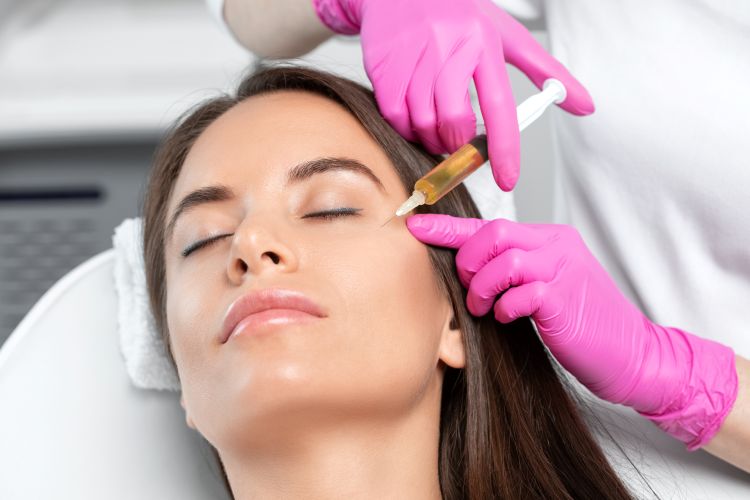
In this treatment method, a small amount of the patient’s own blood is first taken. This is then centrifuged in a specially designed container to extract the blood plasma. The body’s own growth factors or signal proteins contained therein are then drawn into a syringe and injected subcutaneously in a targeted manner. The aim is to concentrate the growth factors that migrate freely in the blood at a selected site so that they can take effect.
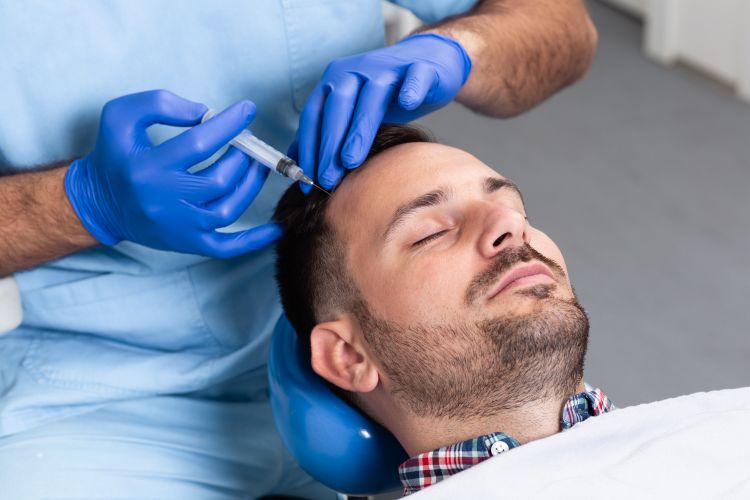
This provides the skin with optimal care and stimulates its natural regenerative abilities. Hair roots in particular can be effectively stimulated and encouraged to grow. In many places, PRP therapy is therefore used after a hair transplant to provide the newly implanted follicles with an optimal breeding ground for growth. However, skin blemishes, injuries or unwanted abnormalities such as dark bags under the eyes are also good indications for this therapy.
It is important to note that:
The PRP department deliberately refrains from adding therapeutic additives such as hyaluronic acid or other substances to the plasma obtained. The material should be injected as naturally as possible so that it can develop its inherent effectiveness.
PRP therapy is particularly effective in combination with other regenerative procedures such as microneedling or mesotherapy. And it is completely minimally invasive, without the need for surgery.
If you are interested in one of our CME-certified medical training courses on this topic, you can find upcoming events in your area in our schedule overview.