NETWORK – Globalhealth
Information for doctors
Departments

Department of AestheticMeso
Information on the standard protocol for aesthetic mesotherapy
Patient information
Attention! This page is intended exclusively for doctors.
For patients who would like to find out more about the therapies we offer, we have created a section tailored specifically to your needs:
To the patient information
Note for doctors
The information provided below is by no means a substitute for comprehensive hands-on training in aesthetic mesotherapy. Only through the theoretical and practical experience gained in our workshops can treatment be carried out safely and efficiently. Our one-day hands-on training course combines three regenerative therapies: mesotherapy, platelet-rich plasma and microneedling.
Topic navigation
- The development of the AestheticMeso department
- The basics of therapy (mechanisms of action, indications, mixtures)
- Publications (meso report, bibliography)
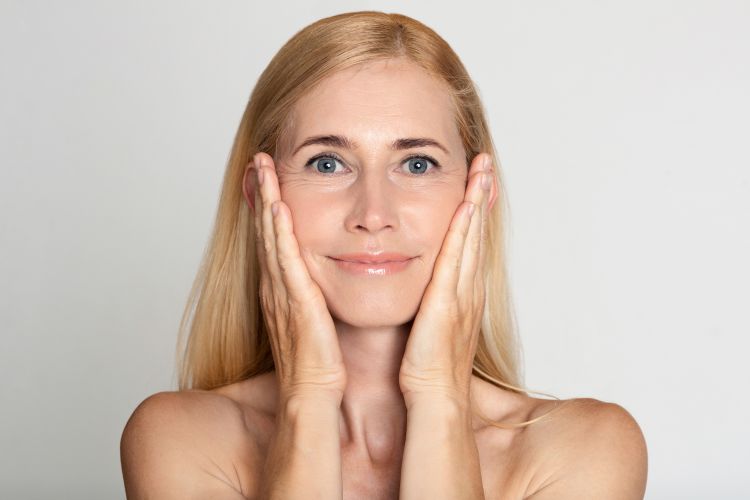
The department of AestheticMeso deals with the treatment of aesthetic indications such as skin ageing and hair loss using mesotherapy.
The development of the AestheticMeso department
Founded in 2006, the AestheticMeso department was the second within our network alongside injection lipolysis. At the time, the aim was to standardise and further develop mesotherapy, which originated in the 1950s, in the field of aesthetic medicine.
Until now, it was standard practice for each doctor to use their own mixtures based on individual recipes and to modify them according to their personal experience. With our ready-made mixtures, developed over many years, we have been able to create a standardisation that guarantees consistent quality and maximum effectiveness. The aim was to achieve a reproducible therapy whose success was no longer dependent on the choice of the respective therapist.
Our members throughout Germany treat patients with identical mixtures according to a fixed standard protocol and, at the same time, use their experience to provide constructive suggestions for the continuous improvement of the formula.
The basics of PRP therapy
Mechanisms of action
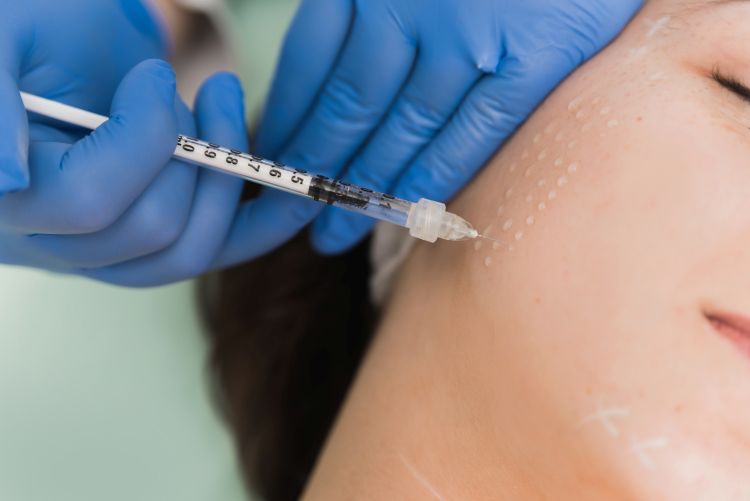
The fundamentals of mesotherapy date back to the work of French physician Michel Pistor in the 1950s. His approach was to bypass the metabolism and inject revitalising and regenerating substances directly under the skin. The aim was to specifically boost the body’s own repair and regeneration processes in the skin.
The AestheticMeso department has now set itself the task of selecting those substances with the highest efficacy and, at the same time, the highest tolerability, and using them as a basis for developing standardised formulations for individual indications.
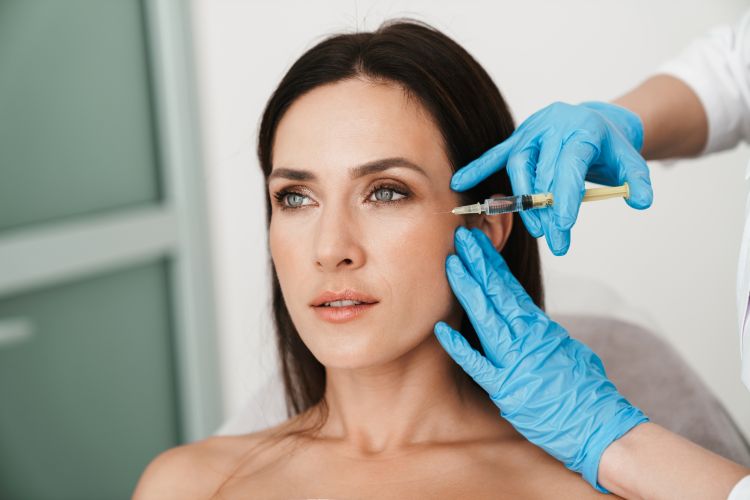
These ready-made mixtures are injected directly into the mesodermal layer of the skin – hence the name mesotherapy. The growth factors they contain exert their regenerative effect there, as described above, and can counteract both skin ageing and the onset of hair loss.
Indications
skin preservation
Ideally, as a doctor, you should not only treat clearly visible skin damage, but also try to preserve your patients’ youthful appearance for as long as possible. Mesotherapy is better suited to this than almost any other therapy.
Sun spots, age spots, loss of elasticity, large pores or small wrinkles that cannot be corrected with hyaluronic acid or botulinum toxin are ideal candidates for treatment with mesotherapy.
A particularly significant synergy effect can be achieved through combination therapy with microneedling or platelet-rich plasma (PRP). However, both you and your patients must be aware that these regenerative procedures do not deliver immediately visible results, but rather aim to achieve long-term improvement of the skin.
Our mixture for improving the appearance of the skin: MesoLift
hair loss
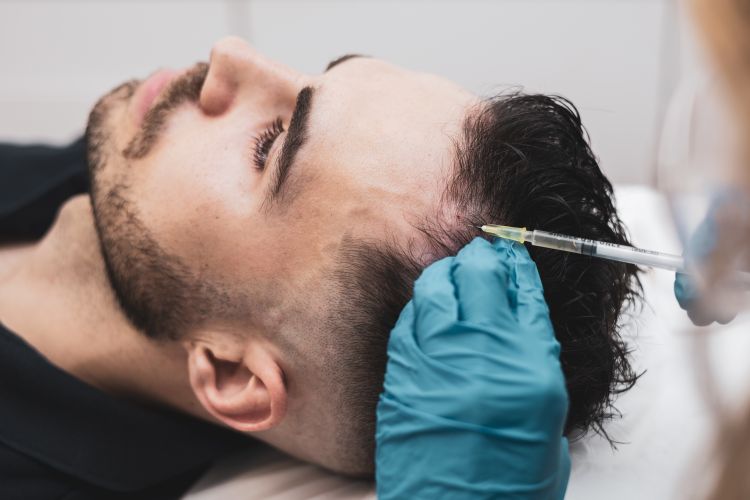
If conservative therapies for combating hair loss do not produce the desired results, mesotherapy can often be an effective remedy that you can recommend to your patients. However, experience shows that truly good results can only be expected if hair loss began no more than two years ago. The more acute the symptoms, the higher the chances of success.
Mesotherapy pursues three overarching goals:
- Stop acute hair loss
- Strengthen and revitalise existing hair
- Stimulate the scalp for new hair growth
It is not always possible to achieve all three goals to everyone’s complete satisfaction. However, maintaining the status quo and achieving a visual improvement often alleviates a great deal of suffering for those affected. In recent years, we have been able to help many female and, increasingly, male patients, particularly in combination with platelet-rich plasma (PRP).
Our mixture for treating hair loss: MesoHair
Mixtures
Our ready-to-use mixtures are individually tailored to the respective indication and contain only substances that have been proven to have actual therapeutic benefits. Several years ago, for example, we replaced the catalyst procaine used in conservative mesotherapy with a combination of silicon, rutin and multivitamins.
MesoLift
In addition to the aforementioned combination of silicon, rutin and multivitamins, the current formula also contains:
- Centella asiatica (tiger grass) from the wealth of experience of traditional Chinese medicine for a fresh and radiant complexion.
- DMAE (dimethylethanolamine), a natural molecule that counteracts age spots and sagging skin by increasing acetylcholine production.
- Non-crosslinked hyaluronic acid, which replenishes the skin’s water reserves, making it appear plumper and rosier.
MesoHair
Compared to MesoLift, we have increased the dose of vitamins H and B5 in this formula to achieve optimal nourishment for the scalp. In addition, the added caffeine increases the concentration of cyclic adenosine monophosphate (cAMP) and boosts lipase activity.
If you are interested in one of our CME-certified training courses, you can find upcoming dates on the schedule of our Globalhealth Academy.
Publications
Meso-Reprt
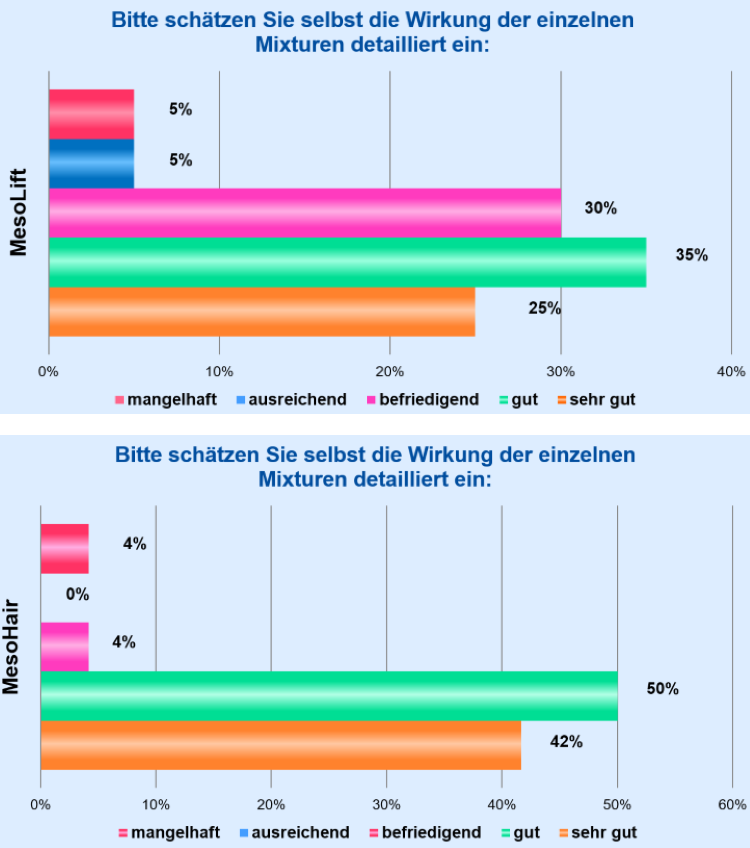
Since 2011, we have been conducting statistical surveys on patient satisfaction and treatment effectiveness within the department. The latest figures are based on evaluations of nearly 1,000 patients who were treated with MesoLift and around 12,500 who were injected with MesoHair.
While 60% of users rated the effectiveness of MesoLift as good to very good, another 30% found it at least satisfactory. Only 10% were not entirely convinced, which in most cases was due to the long application period and the fact that both doctors and patients would have liked to see quick, visible results.
With MesoHair, on the other hand, only 4% were dissatisfied with the mixture’s effectiveness. This clearly demonstrates the positive effect we have achieved through the latest optimisations to the formula.
In terms of pure satisfaction, MesoLift convinced 80% of patients, while MesoHair convinced as many as 85%. These figures are extremely important to us, because healthy patient loyalty is more important than ever, especially in the current climate.
Bibliography
If you would like to familiarise yourself with the subject matter in advance of one of our CME-certified training courses, we have compiled a detailed list of literature on aesthetic mesotherapy.
Current bibliography
Weidmann M, Reich N: Ästhetik – Mesotherapie im Aufbruch: Neue Horizonte durch standardisierte Behandlungsprotokolle, DERM 17, 2011
Weidmann M (2012) Erste statistische Ergebnisse zur ästhetischen Mesotherapie. Kosmet Med 5(12):30–31
Weidmann M (2010) Mesotherapie heute – Entwicklung eines Behandlungsprotokolls: Versuch der Erstellung von Standards durch das NETZWERK-ÄsthetikMeso. Kosmet Med 2(10):80–83
Aust M C, Bahte S, Fernandes D: Bildatlas der perkutanen Kollageninduktion: Grundlagen, Indikationen, Anwendungen. Berlin: KVM; 2013
Weidmann M: Ästhetische Mesotherapie Heute, Spitzenforschung in der ästhetischen Dermatologie und Dermatochirurgie, 2015, 78-81
Funke G: Ästhetische Mesotherapie erfolgreich durchführen, Kosmetische Medizin 5.14, 256-257
Michael Weidmann, Martin Torzicky, Gisela Funke und Dirk Eichelberg: Alternative Methoden zur Behandlung von diffusem Effluvium und Alopecia Areata: Mesotherapie und Platelet Rich Plasma Therapie, Kosmetische Medizin 5.15, 192-194
Weidmann M (2016): 10 Jahre ästhetische Mesotherapie des NETZWERK-ÄsthetikMeso. Kosmet Med 2(16): 60-64
American Society for Dermatologic Surgery (January 2006) Technology report: mesotherapy.
Available at www.asds.net/TechnologyReportMesotherapy.aspx. Accessed 15 February 2008
American Society of Plastic Surgeons (2005) Policy statement: mesotherapy. Available at www.plasticsurgery.org. Accessed 11 February 2008
Amin S, Phelps R, Goldberg D (2006) Mesotherapy for facial skin rejuvenation: a clinical, histologic, and electron microscopic evaluation. Dermatol Surg 32(12):1467-1472
Andre P. Hyaluronic acid and ist use as a “rejuvenation” agent in cosmetic dermatology. Simin Cutan Med Surg 2004: 23: 218-222.
ASPS/PSEF (2007) Non-invasive fat-melting procedures – hype or reality? Emerging trends discussed at American Society of Plastic Surgeons Annual Meeting, October 27, 2007. Available at www.plasticsurgery.org/media/press_releases/Non-Invasive-Fat-Melting-Procedures-Hype-or-Reality.cfm. Accessed 15 February 2008
Bessis D, Guilhou JJ, Guillot B. Localized urticaria pigmentosa triggered by mesotherapy. Dermatology 2004;209:343-4.
Brandao C, Fernandes N, Mesquita N, et al. Abdominal haematoma: A mesotherapy complication. Acta Derm Venerol 85: 446, 2005.
Brown S (2006) The science of mesotherapy: chemical anarchy. Aesthetic Surg J 26:95-98
Bryant R (2004) Controversial mesotherapy: could it be the next Botox? Dermatol Times 25:1
Calikoglu E, Sorg O, Tran C, et al. UVA and UVB decrease the expression of CD44 an hyaluronate in mouse epidermis, which is counteracted by topical retinoids. Photochem Photobiol 2006: 82: 1342-1347.
Centers for Disease Control and Prevention. Outbreak of mesotherapy-associated skin reactions: District of Columbia area, January-February 2005. MMWR Morb Mortal Wkly Rep 54: 1127, 2005.
Clissold SP, Lynch S, Sorkin EM. Buflomedil: A review of ist pharmacodynamic and pharmacokinetics properties and therapeutic efficacy in peripheral and cerebral vascular disease. Drugs 33: 430, 1987
de Rigal J, Escoffer C, Querleux B, et al. Assessment of aging of the human skin by in vivo ultrasonic imaging. J Invest Dermatol 1989: 93: 621-624
Donofrio LM (2007) Mesotherapy. Cosmet Dermatol 20:97-98
Furlong W, Cunanan BA, Weymouth LA, Pearson Jl, Sockwell DC, Jenkins SR, Marr J, Tipple M, Shah DD, Blythe D, Lum GR, Glymph AC, Davies-Cole JO, Srinivasam A, Meites E, Snenshine RH (2005) Outbreak of mesotherapy-associated skin reactions – Distict of Columbia area, January-February 2005. MMWR Morb Mortal Wkly Rep 54:1127-1130
Gniadecka M, Jemec GBE. Quantitative evaluation of chronological ageing and photoageing in vivo: studies on skin echogenicity an thickness. Br J Dermatol 1998: 139: 815-821.
Gniadecka M. Effects of ageing on dermal echogenicity. Skin Res Tech 2001: 7: 204-207.
Greenway FL, Bray GA, Heber D. Topical fat reduction. Obes Res 3: 561S, 1995.
Gryskiewicz JM, Adams WP Jr (2006) Plastic surgeons rate the “hot topics”. Aesthetic Surg J 26:479-484
Hughes TA, Stentz F, Gettys T, Smith SR. Combining beta-adrenergic and peroxisome proliferator-activated receptor gamma stimulation improves lipoprotein composition in healthy moderately obese subjects. Metabolism 55: 26, 2006.
Iorizzo M, De Padova MP, Tosti A. Biorejuvenation : theory and practice. Clin Dermatol 2008: 26: 177-181.
Jemec GBE, Gniadecka M, Ulrich J. Ultrasound in dermatology. Eur J Dermatol 2000: 10: 492-497.
Kalil A (2006) Aesthetic mesotherapy: the US approach an contribution. Cosmet Dermatol 19:753-758
Kaya G, Saurat JH. Dermatoporosis: a chronic cutaneous insufficiency/fragility syndrome. Clinicopathological features, mechanisms, prevention an potential treatments. Dermatology 2007: 215: 284-294.
Kaya G, Tran C, Sorg O, et al. Hyaluronate fragments reverse skin atrophy by a CD44-dependent mechanism. PLoS Med 2006: 3: e493.
Kerscher M, Bayrhammer J, Reuther T. Rejuvenating influence of a stabilized hyaluronic acid-based gel of nonanimal origin on facial skin aging. Dermatol Surg 2008: 34: 720-726.
Lacarrubba F, Nardone B, Tedeschi A, Nordstrom R, Micali G. Ultrasound evaluation of mesotherapy for skin rejuvenation. In: Tosti A, De Padova MP, eds. Atlas of mesotherapy in skin rejuvenation. London, UK: Informa Healthcare Ltd, 2007.
Lawrence N (2003) Commentary: no smoking gun: findings from a national survey of office-based cosmetic surgery adverse event reporting. Dermatol Surg 29:1099
Lübeck RP, Berneburg M, Trelles M, et al. How best to halt and/or revert UV-induced skin ageing: strategies, facts and fiction. Exp Dermatol 2008: 17: 228-240.
Madhere S Aesthetic Mesotherapy, CRC Press,Taylor & Francis Group, © 2008 by Taylor & Francis Group, LLC, RC Press is an imprint of Taylor & Francis Group
Mesotherapy and Estetik. Available at www.mesotherapy.com/faq/. Accesses 11 February 2008
Micali G, Lacarrubba F, Tedeschi A, Nodstrom R (2008) Mesotherapy for rejuvenation of photoaged skin: Ultrasound evaluation. J Am Acad Dermatol 58:AB23
Monticone M, Barbarino A, Testi C, et al. Symptomatic efficacy of stabilizing treatment versus laser therapy for sub-acute low back pain with positive tests for sacroiliac dysfunction: A randomized clinical controlled trial with 1 year follow-up. Eura Medicophys 40: 263: 2004
Nagore E, Ramos P, Botella-Estrada R, et al. Cutaneous infection with Mycobacterium fortuitum after localized microinjections (mesotherapy) treated successfully with a triple drug regimen. Acta Derm Venereol 2001;81:291-3.
Park YY, Cellulite and Aesthetic Mesotherapy. Seoul: Hanmi Medical Publishing, 2004. P. 134.
Pistor M. [What is mesotherapy?]. Chir Dent Fr 1976;46:59-60.
Rallan D, Harland CC. Ultrasound in dermatology – basic principles and applications. Clin Exp Dermatol 2003: 28: 632-638.
Ramos-e, -Silva M, da Silva Carneiro SC. Elderly skin and its rejuvenation. Products an procedures for the aging skin. J Cosmet Dermatol 2007:6:40-50.
Rivera-Olivero IA, Guevara A, Escalona A, et al. Soft tissue infections due to non-tuberculous mycobacteria following mesotherapy: What is the price of beauty. Eferm Infecc Microbiol Clin 24: 302, 2006.
Rohrich RJ. Mesotherapy: What ist it? Does it work? Plast Reconstr Surg 115: 1425, 2005.
Rosina P, Chieregato C, Miccolis D, et al. Psoriasis and side-effects of mesotherapy. Int J Dermatol 40: 581, 2001.
Salas AP, Asaadi M. Aesthetic application of mesotherapy: A preliminary report (Abstract). Presented at the Annual Meeting of the American Society for Aesthetic Plastic Surgery, Vancouver, British Columbia, Canada, April 17, 2004.
Sandby-Moller J, Wulf HC. Ultrasonographic subepidermal low-echogenic band, dependence of age an body site. Skin Res Tech 2004: 10: 57-63.
Schmults CD, Phelps R, Goldberg DJ. Nonablative facial remodeling erythema reduction and histologic evidence of new collagen formation using a 300 micosecond 1064-nm Nd: YAG laser. Arch Dermatol 2004;140:1373-6.
Seidell JC, Bakker CJ, van der Kooy K. Imaging techniques for measuring adipose-Tissue distribution: A comparison between computed tomography an 1.5-T magnetic resonance. Am J Clin Nutr 51: 953, 1990.
Singh K (2006) Nonsurgical facial rejuvenation. J Int Med Sci Acad 19:158-164
Soncini G, Costantino C. The treatment of pathologic calcification of shoulder tendons with E.D.T.A. bisodium salt by mesotherapy. Acta Biomed Ateneo Parmense 69: 133, 1998.
Stachowski J, Botts K, Rine L, Kato D, Pollock J (2006) Mesotherapy: cosmetic applications. Int J Pharmaceut Compound 10:331-334
Tennstedt D, Lachapelle JM. Cutaneous adverse effects of mesotherapy. Ann Dermatol Venerol 124: 192, 1997.
Tokunaga K, Matsuzawa Y, Ishikawa K, et al. A novel technique for the determination of body fat by computed tomography. Int J Obes 7: 437, 1983.
Tonkovic-Capin M, Riddle CC, Schweiger ES, Aires DJ, Manson SH, Tonkovic-Capin V (2007) Brief discussion: medicolegal aspects of consent and checklists for common cosmetic procedures. Comet Dermatol 20(5):291-294
Verdier-Sévrain S, Bonté F, Gilchrest B. Biology of estrogens in skin: implications for skin aging. Exp Dermatol 2006: 15: 83-94.
Verpaele A, Strand A. Restylane SubQ, a non-animal stabilizes hyluronic acid gel for soft tissue augmentation of the mid- and lower face. Aesthet Surg J 2006: 26: 510-517.
Waller JM, Maibach HI. Age and skin structure and function, a quantitative approach (I): blood flow, thickness, and ultrasound echogenicity. Skin Res Tech 2005: 11: 221-235.
Wies L, Kerscher M. Native hyaluronic acid in dermatology – results of an expert meeting. J Dtsch Dermatol Ges 2008: 6: 176-180.